
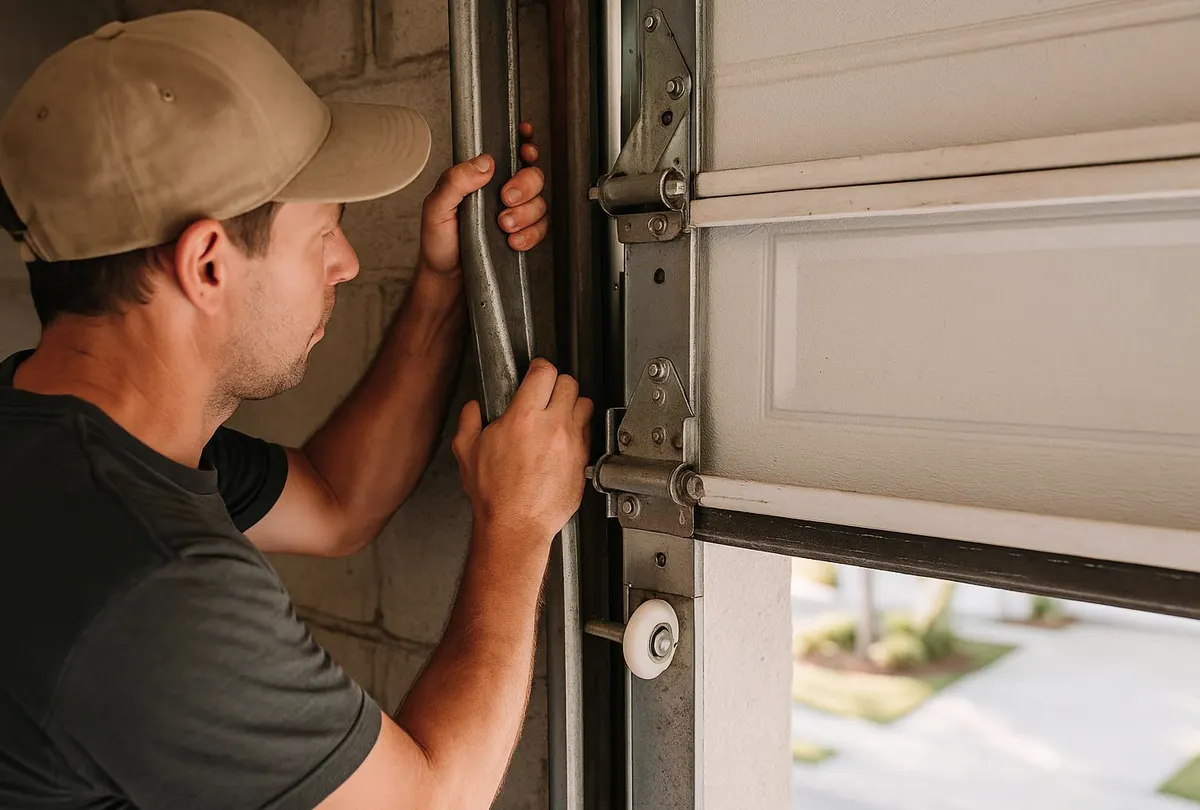
Winter-Proofing Your Garage Door: The Short Answer
Getting a garage door ready for winter means doing five things before the first hard freeze: replace worn weatherstripping, switch to a cold-weather lubricant, test the door's balance, check the springs and cables for wear, and confirm your opener's sensors and battery backup are working. Do these now, in October, while temperatures are still mild enough to work on the door comfortably. Once the cold sets in, steel contracts, grease thickens, and small problems turn into stuck doors and stranded cars fast.
Why Chicago Winters Are Hard on Garage Doors
This area doesn't get a gentle winter. Temperatures swing from a 50-degree afternoon to single digits overnight, sometimes within the same week. That kind of swing makes metal expand and contract, which loosens hardware and stresses springs. Add in ice buildup along the bottom seal, road salt tracked in on tires and boots, and wind-driven snow finding every gap in the weatherstripping, and you've got a system working harder than it does any other time of year. Garage doors on homes with an attached garage feel this the most, since a failing seal doesn't just let in cold air — it lets that cold straight into a wall that backs up to living space.
Check the Weatherstripping First
Start at the bottom. The rubber seal along the floor is the first thing to crack, flatten, or tear from a season of ice scraping and salt exposure. Press on it — if it's stiff, cracked, or doesn't spring back into shape, it's done. Replacement seals are inexpensive and most homeowners can swap them out in under an hour, but this is also the kind of small job that's easy to put off and then forget about until there's already a draft or a puddle under the door. Check the side and top seals too, since gaps there let wind-driven snow in just as easily.
Switch to a Cold-Weather Lubricant
Standard grease thickens in the cold, which makes rollers, hinges, and the torsion spring itself work harder to move. That extra resistance is exactly what causes openers to strain and belts to slip in January. Use a silicone-based garage door lubricant rated for low temperatures on the rollers, hinges, and springs before the real cold arrives. Skip anything petroleum-heavy — it gums up in the cold instead of staying slick.
Test the Balance Before You Need To
A door that's out of balance will fight the opener all winter, and cold makes an already-marginal spring work that much harder. Disconnect the opener by pulling the release handle, then lift the door manually about halfway. It should stay put on its own. If it drifts down or shoots up, the springs are compensating poorly for the door's weight, and that imbalance gets worse, not better, in freezing temperatures. This isn't a DIY adjustment — torsion springs are under heavy tension and adjusting them without the right tools is a real injury risk. If the balance test fails, that's a call for a technician, not a weekend project.
Inspect Springs and Cables for Wear
Cold steel is more brittle than warm steel, and a spring that's been slowly wearing out all year is more likely to snap on a sub-zero morning than a mild one. Look for gaps in the coils, rust, or visible stretching. Cables should be free of fraying at the ends near the bottom brackets. A spring failure doesn't just mean a door that won't open — it can mean a door that comes down hard and fast, so this is worth catching before winter rather than during it.
Don't Forget the Opener
Photo-eye sensors near the bottom of the tracks can get knocked out of alignment or fogged up with condensation once temperatures drop, which causes the door to reverse or refuse to close for no obvious reason. Wipe the lenses clean and make sure they're pointed directly at each other. If your opener has a battery backup, test it now — a dead backup battery combined with a power outage during an ice storm means you're stuck using the manual release in the cold, which nobody wants to deal with in a parka.
Consider Insulation If You Haven't Already
If your garage is attached to the house and the door is an older, single-layer panel, insulated retrofit kits or an insulated replacement door can make a noticeable difference in how much cold transfers through that wall. This matters more for homes using the garage as a workspace or those with rooms directly above or beside it. It's not a job that needs doing every year, but if the garage feels like an icebox and the door itself is the thin, hollow type, it's worth a look before winter rather than after the pipes in there have already felt it.
When to Call Chicago Garage Door
If the balance test fails, if you spot a stretched or rusted spring, or if the opener is straining and making new noises, that's the point to stop troubleshooting on your own. Chicago Garage Door handles spring replacement and garage door maintenance year-round, including the kind of pre-winter tune-up that catches worn cables, misaligned sensors, and failing seals before they turn into a no-start morning in January. A technician can also rebalance the door safely and check that the opener's force settings haven't drifted, which is common once cold weather changes how the door moves.
Get Ahead of the Cold
Chicago's winters don't give much warning once they arrive. If your garage door hasn't had a real look since last spring, now's the time. Call Chicago Garage Door to schedule a pre-winter inspection or repair anywhere in Chicago, IL and the surrounding South Side suburbs, and head into the cold season with a door that opens every time.